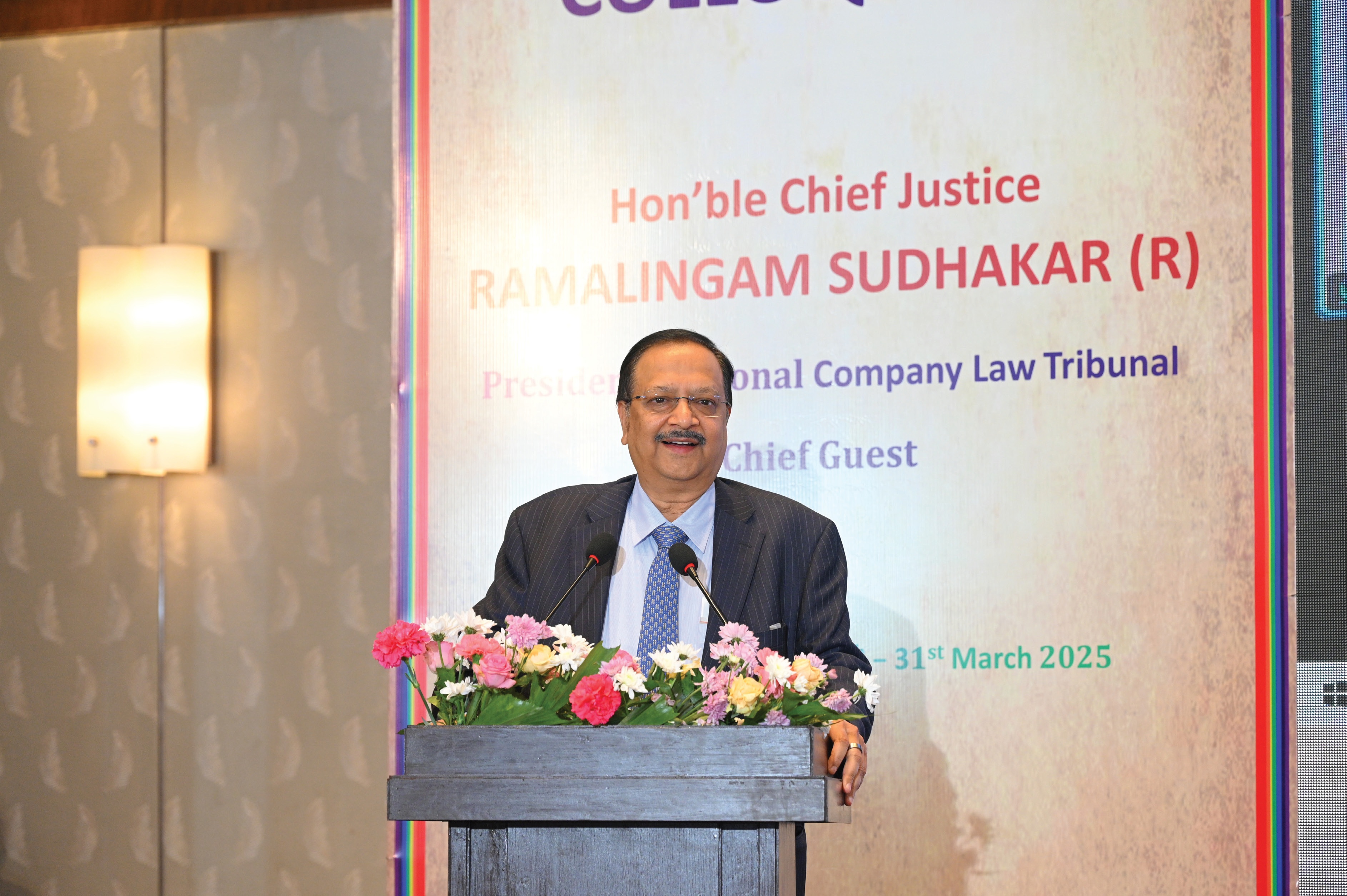
The National Company Law Tribunal (NCLT), the Insolvency and Bankruptcy Board of India (IBBI), and the National e-Governance Services Limited (NeSL) jointly convened the IBBI–NeSL Colloquium and Training Programme at Ahmedabad from 29 March to 31 March 2025. Hosted at ITC Narmada, the programme marked a significant milestone in ongoing capacity-building initiatives aimed at strengthening India’s corporate and insolvency ecosystem.
The event saw the participation of more than sixty-one Hon’ble Members of the NCLT, along with senior officials from the Ministry of Corporate Affairs, IBBI, NeSL, and representatives from leading financial institutions across the country. The diversity of expertise and institutional viewpoints enriched the discussions and fostered a constructive exchange of ideas aligned with the broader vision of reform and institutional consolidation.
The Colloquium reaffirmed the shared commitment of all stakeholders to enhancing the integrity, efficiency, and timeliness of corporate and insolvency adjudication in India, underscoring the collective resolve to further strengthen the institutional framework of the NCLT.
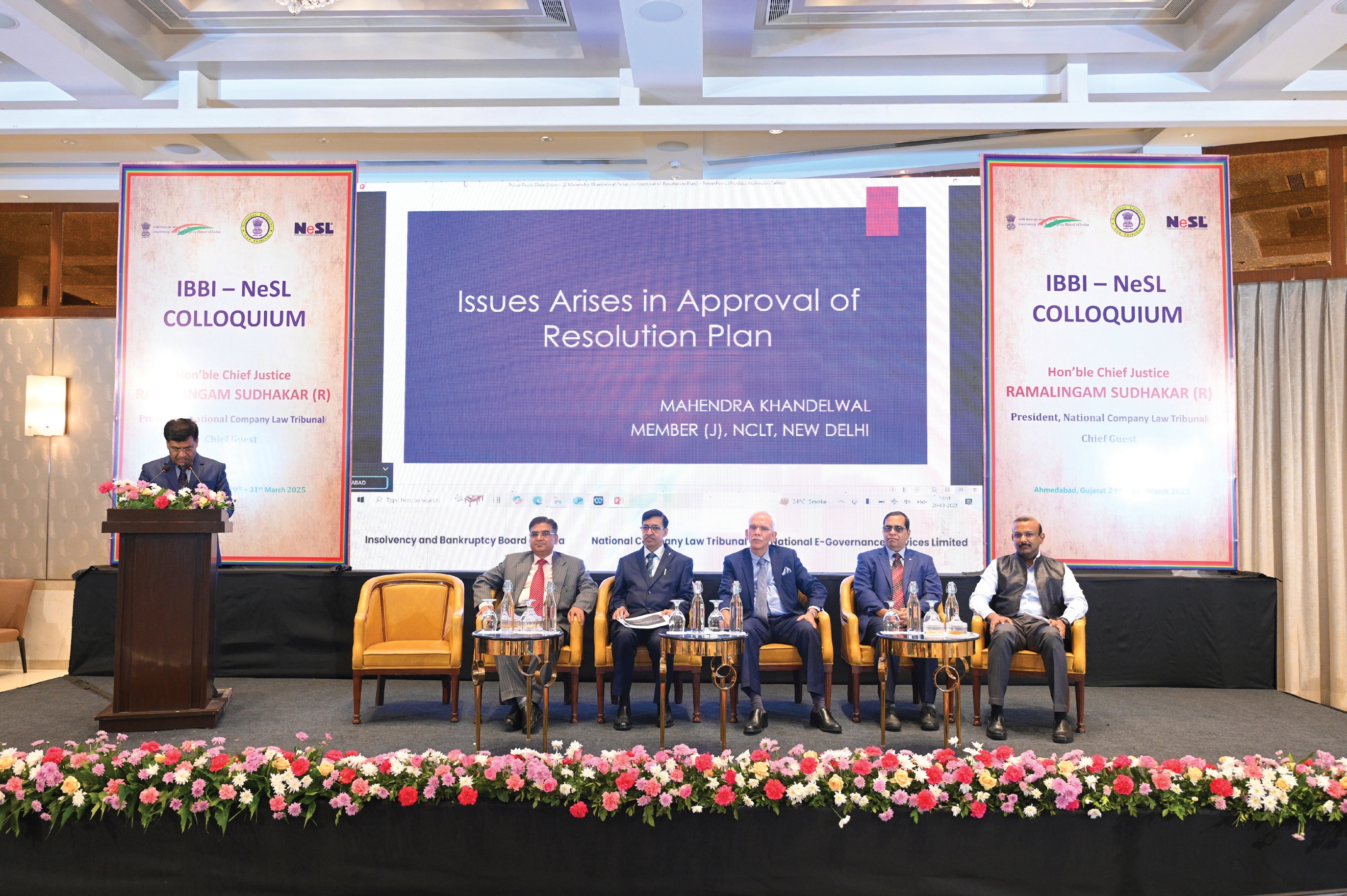
Overview of the Colloquium
The Colloquium spanned three days and was structured as a dynamic and interactive platform aimed at strengthening the adjudicatory capacity of the NCLT and fostering deeper institutional coordination. Through a series of technical and thematic sessions, subject-matter experts guided participants on key procedural, interpretative, and systemic issues central to effective implementation of the Insolvency and Bankruptcy Code. The programme was designed to facilitate focused discussions on admission processes, resolution plan approvals, fast-tracking mechanisms, institutional best practices, and the responsible integration of technology in adjudication—all of which remain critical to enhancing efficiency and consistency across NCLT Benches.
The key objectives of the event included:
- Discussing significant issues in the admission of applications under Sections 7 and 9 of the Insolvency and Bankruptcy Code.
- Deliberating on the approval or rejection of resolution plans and the efficient handling of interlocutory applications opposing such plans.
- Examining mechanisms for fast-tracking plan approvals in real estate matters.
- Analysing challenges and solutions related to the expedited adjudication of PUFE applications.
- Exploring the role of financial institutions in accelerating the progress of IBC cases.
- Assessing the potential of Artificial Intelligence in adjudication and identifying appropriate safeguards for its responsible use.
- Strengthening coordination and synergy among regulatory authorities, adjudicating bodies, and key stakeholders.
- Facilitating the exchange of institutional best practices.
- Enhancing the overall adjudicatory efficiency and consistency of the NCLT.