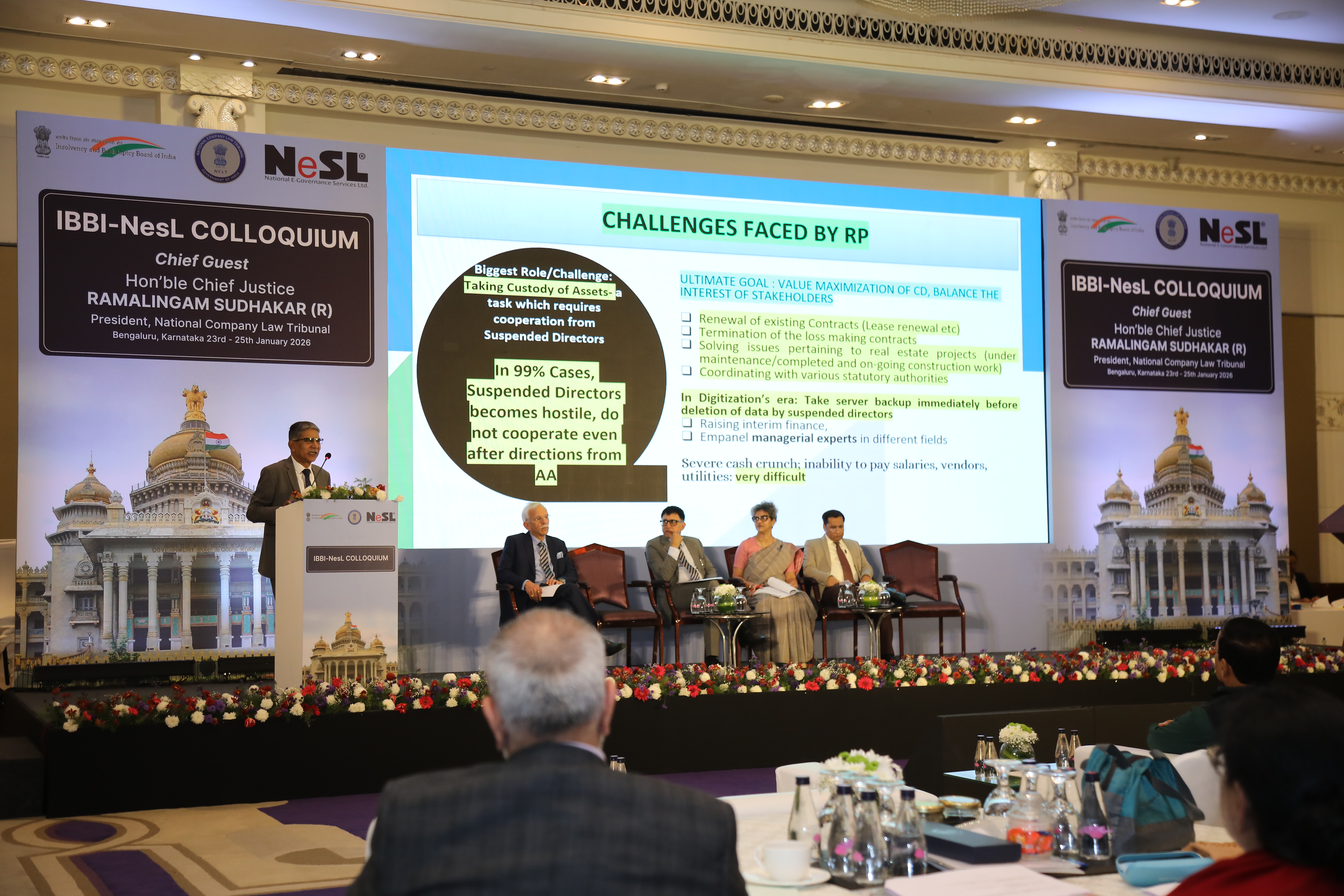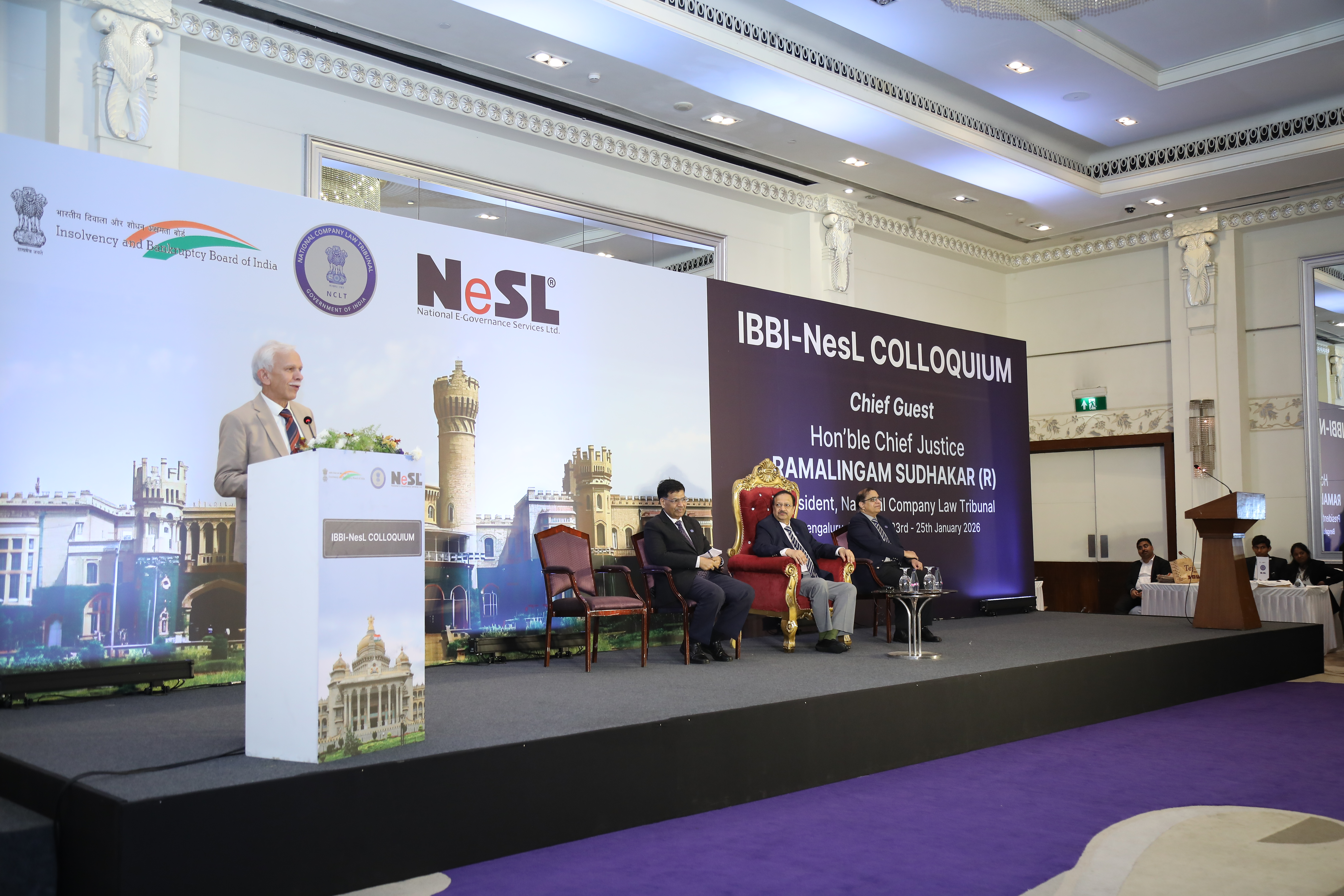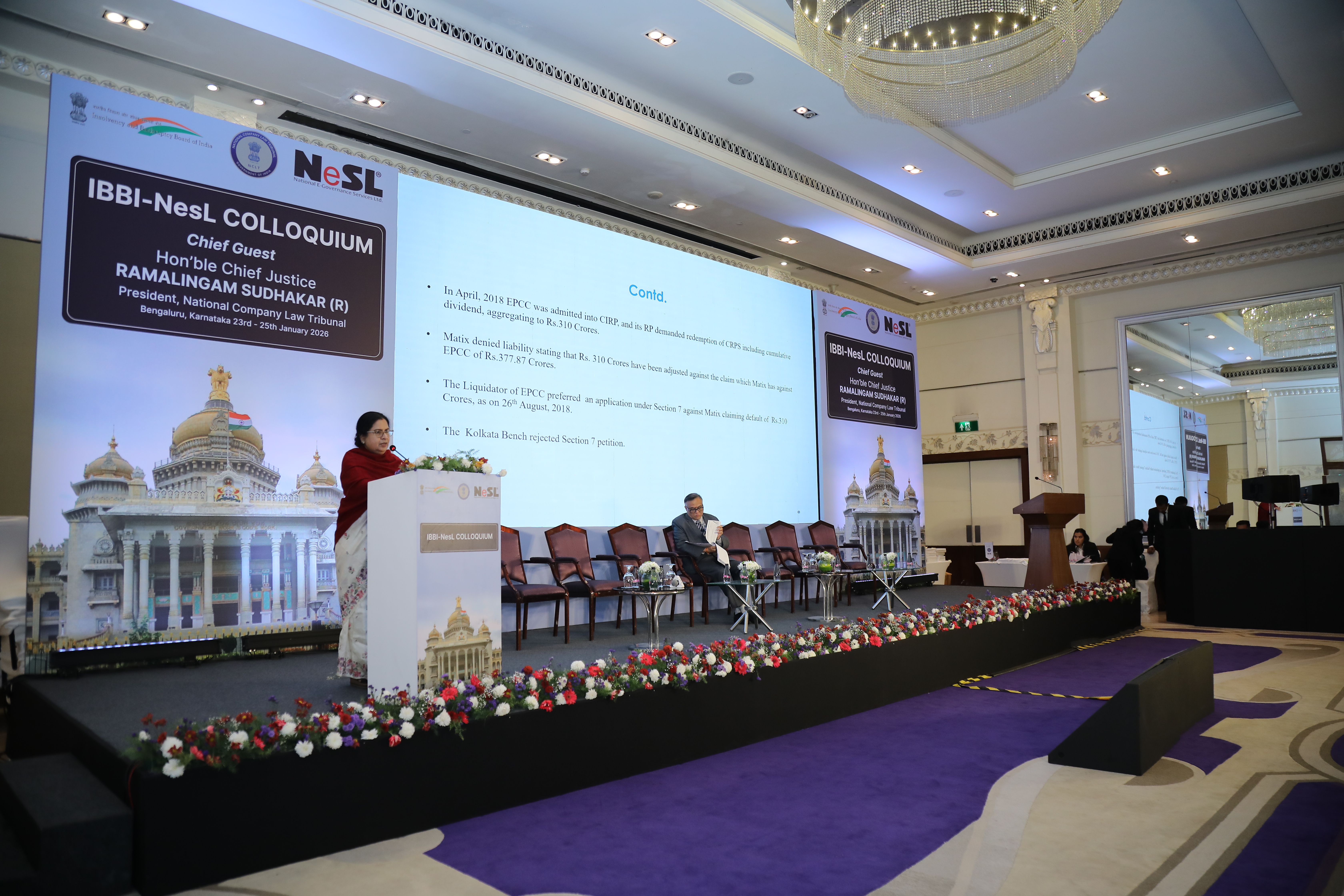
The IBBI–NeSL Colloquium on "Strengthening Insolvency Resolution and Corporate Governance" was held from 23 January 2026 to 25 January 2026 in Bengaluru. The programme brought together Hon'ble Members of the National Company Law Tribunal, senior officials from the Ministry of Corporate Affairs, the Insolvency and Bankruptcy Board of India, and NeSL, along with the IBBI Chairman, Resolution Professionals, representatives from leading financial institutions, and judicial and technical members drawn from NCLT benches across the country. The wide spectrum of institutional perspectives — spanning adjudication, regulation, banking, and insolvency practice — fostered substantive and insightful discussions across a rich agenda that encompassed the state of India's insolvency ecosystem, real estate insolvency and the protection of homebuyer rights, the role and accountability of Resolution Professionals, the scope of admissions under Sections 7, 94 and 95 of the IBC, the impact of landmark judgments of the Hon'ble Supreme Court and NCLAT on the adjudicatory process, and issues arising under Company Law. The Colloquium also provided a dedicated forum for experience-sharing on the impact of the colloquium series itself on NCLT's institutional performance and regulatory evolution. The deliberations reaffirmed the collective commitment of all stakeholders to strengthening the integrity, timeliness, and overall effectiveness of corporate and insolvency adjudication in India, underscoring the importance of sustained collaborative engagement in enhancing institutional capacity, judicial consistency, and governance standards across the insolvency ecosystem.
Overview of the Colloquium
The Colloquium spanned three days and was designed as a dynamic and interactive platform.
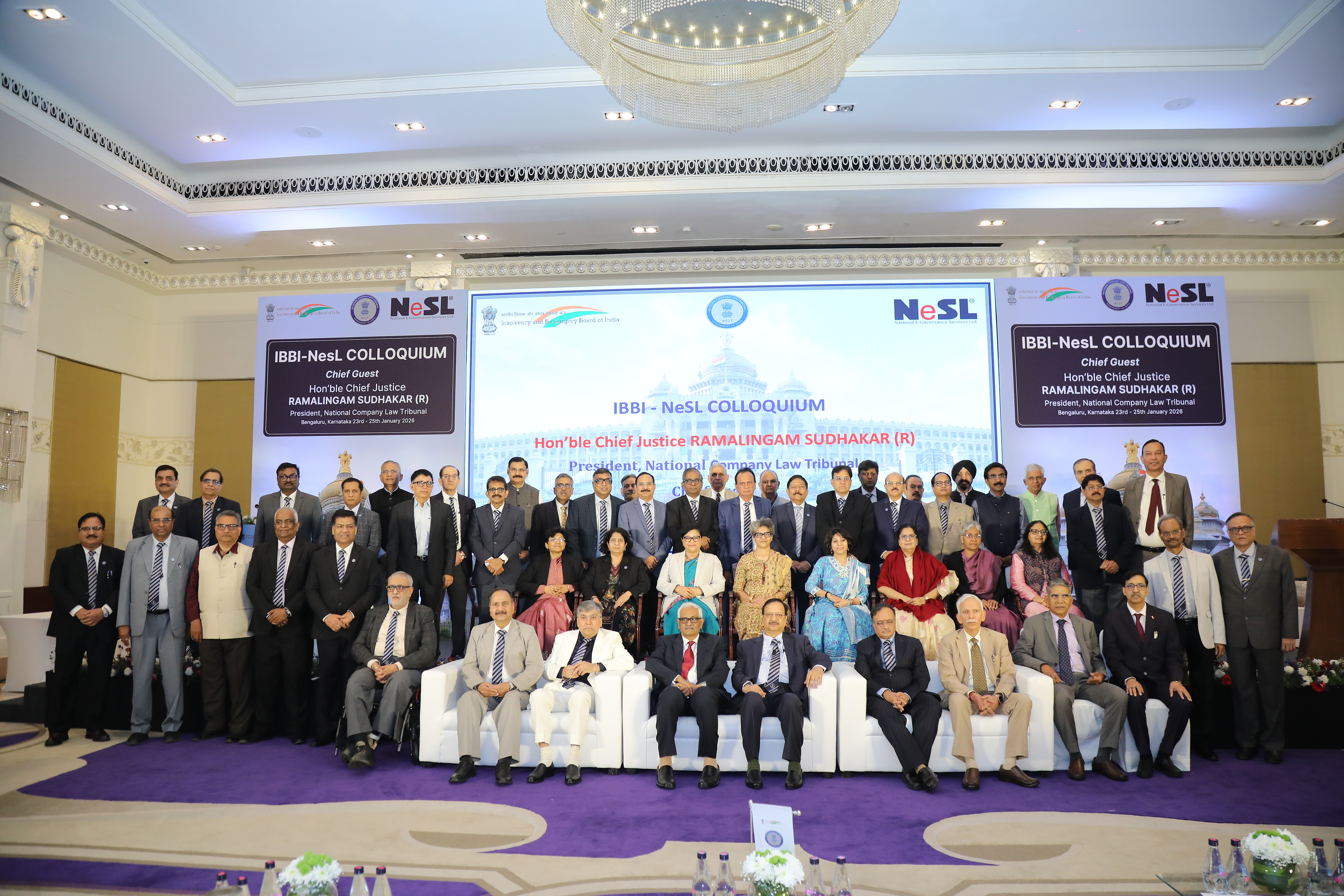
The key objectives of the event included:
- Reviewing the performance of the Insolvency and Bankruptcy Code since its enactment, with particular focus on NCLT's growth over the last four years and its measurable impact on India's credit ecosystem, banking sector health, and broader economy.
- Deliberating on the complex legal and practical challenges arising in real estate insolvency, including the rights and protections available to homebuyers, the treatment of belated claims, and the viability of resolution plans in stalled real estate projects.
- Examining the interface between the IBC and the Real Estate (Regulation and Development) Act, 2016 (RERA), including the ramifications of RERA orders during the CIRP moratorium and the primacy of the IBC in cases of conflict.
- Discussing the legal framework governing project-wise insolvency resolution and consolidation of CIRP proceedings in the context of real estate corporate groups and interconnected entities.
- Analysing the role and accountability of Resolution Professionals in CIRP, including their obligations to key stakeholders, challenges in asset custody, and their emerging classification as public servants.
- Exploring the scope of admission under Section 7 of the IBC, with specific focus on applications by debenture trustees, holders of compulsorily and optionally convertible debentures, and preference shareholders, drawing on recent Supreme Court and NCLAT jurisprudence.
- Examining the scope and application of Section 65 of the IBC in relation to fraudulent and malicious initiation of insolvency proceedings, with particular reference to personal guarantor matters under Part III of the Code.
- Deliberating on the scope of addendum or modification of resolution plans during pendency and the legal framework governing post-approval plan implementation through Monitoring Committees.
- Analysing the impact of landmark judgments of the Hon'ble Supreme Court and NCLAT — including rulings on withdrawal of CIRP under Section 12A, competition law compliance in resolution plans, and the doctrine of stare decisis — on the adjudicatory process of the NCLT.
- Discussing issues arising under Company Law, including adjudication under Sections 58 and 59 of the Companies Act, 2013, relating to refusal of registration of securities transfers and rectification of the register of members.
- Examining the jurisdiction of NCLT under Sections 94 and 95 of the IBC governing personal insolvency of guarantors, including procedural requirements at the stage of RP appointment and the treatment of excluded assets.
- Sharing experiences on the transformative impact of the NCLT Colloquium series on institutional capacity building, uniformity in adjudication, and the evolution of the insolvency regulatory framework through collaborative dialogue between the judiciary, the regulator, and key stakeholders.